

SDC
Yellowtail Blue Damselfish
Yellowtail Blue Damselfish
Couldn't load pickup availability
Free overnight shipping at $169+. $12.50 packaging applies. Destination restrictions apply.
Shipping details Day-of-arrival claim requirements
Free Shipping*
Free Shipping*
Orders $169 and over qualify for free overnight shipping. A $12.50 packaging fee applies. Destination rates and restrictions apply. Shipping details.
Live Arrival Guaranteed
Live Arrival Guaranteed
Live arrival is covered on the day of arrival only. Email photos under 5MB to support@SaltwaterFishSale.com on that same day. For valid DOA claims, we offer a refund or store credit for the value of the fish within 5 business days. No videos or reshipments. Shipping is non-refundable. Additional proof is required for fish over $100. Full claim instructions.
At a Glance: Quick Species Facts
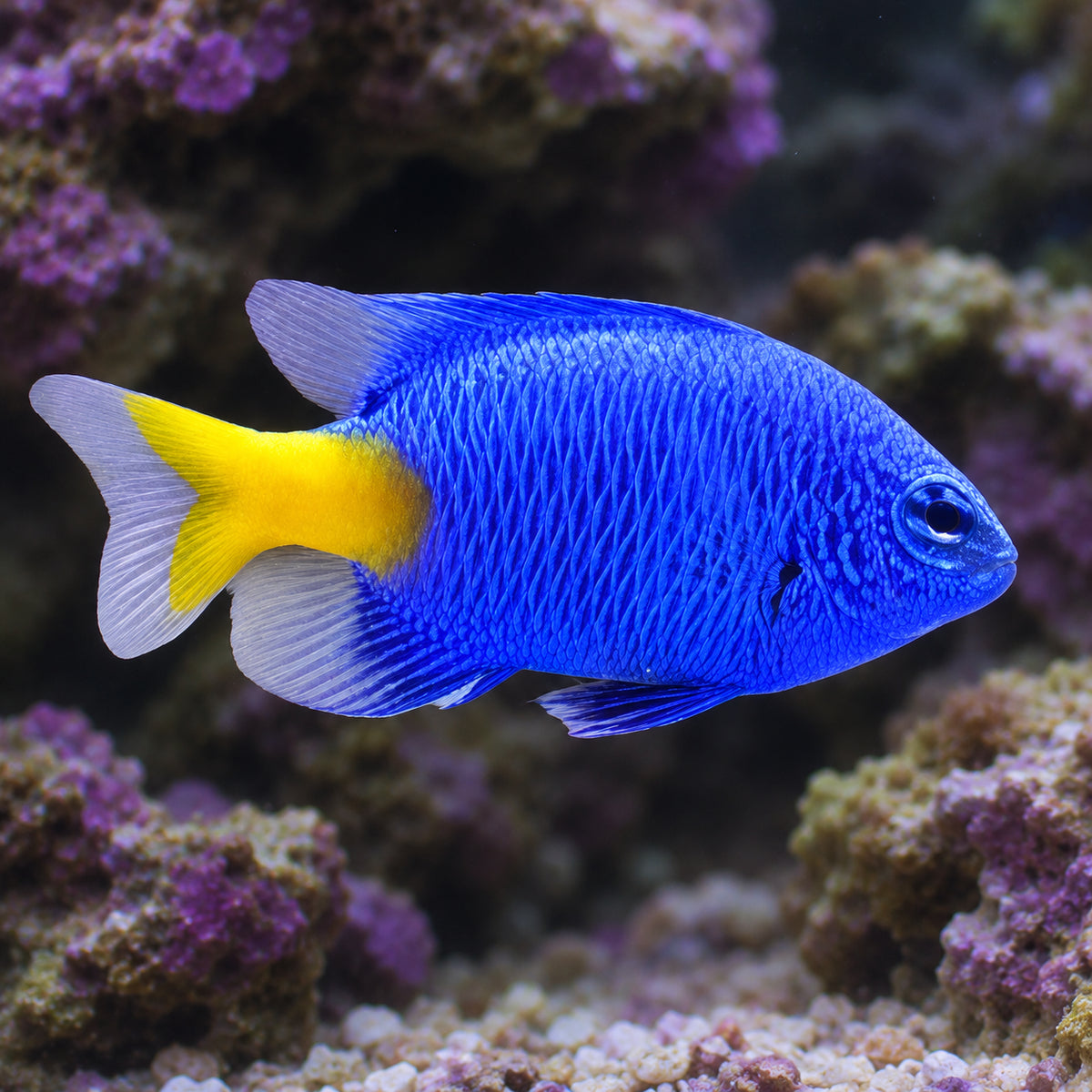
The Yellowtail Blue Damselfish (Chrysiptera sp.) is a beautiful and energetic saltwater fish known for its brilliant electric-blue body and striking yellow tail. Its vibrant coloration, compact size, and active personality make it a popular addition to established marine aquariums.
Yellowtail Blue Damselfish are generally considered among the more manageable members of the damselfish family. While they are relatively hardy and adaptable, they can develop territorial behavior, particularly around preferred hiding places. With appropriate tank mates, sufficient swimming space, and plenty of live rock, they can make excellent additions to community saltwater aquariums.
- Common Name: Yellowtail Blue Damselfish
- Scientific Name: Chrysiptera sp.
- Family: Pomacentridae
- Origin: Indo-Pacific
- Care Level: Easy to Moderate
- Temperament: Semi-Aggressive
- Diet: Omnivore
- Maximum Adult Size: Approximately 3 inches
- Minimum Tank Size: 30 Gallons
- Reef Compatibility: Generally Reef Safe
- Water Temperature: 72–78°F
- Specific Gravity: 1.020–1.025
- pH: 8.1–8.4
Characteristics
The Yellowtail Blue Damselfish is instantly recognizable by its intense blue coloration and contrasting golden-yellow tail. Its streamlined body, rounded fins, and compact proportions create an attractive appearance that stands out against natural live rock and coral formations.
These fish are active swimmers that frequently explore their surroundings. They typically establish a preferred territory among rock formations, occasionally venturing into open water before retreating to their chosen shelter.
In the wild, yellowtail damselfish inhabit tropical coral reefs where they rely on branching corals, rocky crevices, and other protective structures for shelter. Replicating these environmental features helps encourage natural behavior and reduces stress in captivity.
Coloration: The species is primarily recognized for its brilliant electric-blue body and bright yellow tail. Individual coloration may vary depending on age, lighting, environmental conditions, and stress levels. Recently shipped fish may temporarily display less vibrant colors while adjusting to their new environment.
Size and Growth: Yellowtail Blue Damselfish generally remain relatively small, reaching approximately 3 inches as adults. Their compact size makes them suitable for appropriately maintained smaller marine aquariums, although sufficient swimming space remains essential.
Optimal Aquarium Conditions & Care Guide
Yellowtail Blue Damselfish are relatively hardy marine fish, but maintaining stable water chemistry is essential for their long-term health. They should be introduced into a fully cycled aquarium with established biological filtration, adequate oxygenation, and consistent environmental conditions.
- Minimum Aquarium Size: 30 gallons for an individual, with larger aquariums recommended for multiple fish.
- Water Temperature: Maintain a stable temperature between 72–78°F.
- pH: Maintain a pH between 8.1–8.4.
- Specific Gravity: Maintain marine salinity between 1.020–1.025.
- Water Movement: Moderate circulation with well-oxygenated water.
- Substrate: Aragonite sand or crushed coral.
- Lighting: Standard marine aquarium lighting or appropriate reef lighting.
- Aquascaping: Provide live rock, caves, crevices, and open swimming areas.
Live Rock and Shelter: A well-structured aquarium containing multiple caves and hiding places is especially beneficial. Yellowtail Blue Damselfish commonly establish territories around rock formations, making adequate shelter important for reducing aggression and promoting natural behavior.
Water Quality: Ammonia and nitrite should remain undetectable. Stable salinity, temperature, and pH are important because sudden environmental changes can cause stress and compromise fish health.
Aquarium Maturity: These fish should not be introduced into an uncycled aquarium. An established biological filtration system and consistent water parameters provide the most suitable environment for long-term success.
Behavior and Tank Mates
Yellowtail Blue Damselfish are generally less aggressive than many other damselfish species, but they can still display territorial behavior. Once established, an individual may defend a preferred cave or section of rockwork against other fish.
Their relatively manageable temperament allows them to coexist with many appropriately sized marine aquarium fish. However, compatibility depends on aquarium size, available shelter, established territories, and the personalities of individual fish.
Recommended Tank Mates:
- Clownfish: Ocellaris and Percula Clownfish are often suitable companions in appropriately sized aquariums.
- Gobies: Many peaceful gobies can coexist with Yellowtail Blue Damselfish when adequate shelter is available.
- Blennies: Compatible blenny species can occupy different areas of the aquarium.
- Cardinalfish: Appropriately sized cardinalfish may be suitable in established community systems.
- Royal Grammas: Can be compatible when sufficient territory and hiding places are provided.
- Peaceful Wrasses: Many smaller reef-compatible wrasses make suitable companions.
Tank Mates to Avoid: Exercise caution with highly aggressive damselfish, exceptionally timid species, and fish that compete directly for limited territories. Large predatory fish should also be avoided because they may view smaller damselfish as prey.
Territorial Behavior: Aggression may increase when multiple similar damselfish are housed together, particularly in smaller aquariums. Providing multiple hiding places and adequate swimming space can help reduce competition.
Reef Compatibility: Yellowtail Blue Damselfish are generally considered reef safe and are not typically known to consume healthy coral tissue. They can be suitable for established reef aquariums containing many commonly kept corals and marine invertebrates.
Diet and Feeding Requirements
Yellowtail Blue Damselfish are omnivorous marine fish that naturally consume small planktonic organisms and other available food sources. In captivity, they readily accept a variety of commercially prepared and frozen marine aquarium foods.
Recommended Foods:
- Frozen Mysis Shrimp: A protein-rich marine food that supports healthy growth and overall condition.
- Vitamin-Enriched Brine Shrimp: A supplemental food that can help provide dietary variety.
- Marine Plankton: Appropriately sized plankton preparations help replicate natural feeding opportunities.
- Marine Pellets: High-quality pellets formulated for omnivorous saltwater fish.
- Marine Flake Foods: Nutritionally balanced flakes formulated for marine aquarium species.
- Spirulina-Enriched Foods: Provide additional plant-based nutrients as part of a varied diet.
- Finely Chopped Marine Seafood: Small portions of suitable marine seafood can provide additional dietary variety.
Dietary Variety: A balanced combination of marine proteins and plant-based nutrients helps support coloration, energy, and overall health. Select foods appropriate for the fish's mouth size and nutritional requirements.
Feeding Behavior: Yellowtail Blue Damselfish are generally enthusiastic feeders. Observe feeding interactions to ensure that other aquarium inhabitants receive adequate nutrition, particularly when territorial fish are present.
Water Quality Considerations: Remove excess uneaten food to prevent unnecessary nutrient accumulation and maintain a healthy marine aquarium environment.
Important Shipping & Acclimation Notes
Live Animal Notice: Each Yellowtail Blue Damselfish is a living animal, and natural variations in size, coloration, markings, and behavior should be expected. Product photographs are representative of the species offered and may not depict the exact individual shipped.
Shipping Stress: Transportation can temporarily affect a fish's coloration, activity level, and appetite. Some individuals may initially appear pale, remain hidden, or display reduced activity while adjusting to their new environment.
Acclimation: Upon arrival, carefully inspect your fish and follow the acclimation instructions included with your shipment. Avoid sudden changes in temperature, salinity, and other water parameters.
Initial Aquarium Introduction: Introduce your new Yellowtail Blue Damselfish into a fully cycled aquarium with stable water conditions and adequate shelter. Closely monitor interactions with established tank mates, particularly during the initial adjustment period.
Coloration After Shipping: Temporary color changes are common following transportation. Vibrant coloration may become more pronounced as the fish settles into a stable, low-stress environment.
Important Reminder: Proper aquarium preparation, stable water chemistry, compatible tank mates, and responsible husbandry are essential for the long-term health and well-being of your Yellowtail Blue Damselfish.
-
Free Shipping
Orders $169 and over qualify for free overnight shipping. A $12.50 packaging fee applies. Destination rates and restrictions apply. Shipping details.