

SDC
Copperband Butterflyfish
Copperband Butterflyfish
Couldn't load pickup availability
Free overnight shipping at $169+. $12.50 packaging applies. Destination restrictions apply.
Shipping details Day-of-arrival claim requirements
Free Shipping*
Free Shipping*
Orders $169 and over qualify for free overnight shipping. A $12.50 packaging fee applies. Destination rates and restrictions apply. Shipping details.
Live Arrival Guaranteed
Live Arrival Guaranteed
Live arrival is covered on the day of arrival only. Email photos under 5MB to support@SaltwaterFishSale.com on that same day. For valid DOA claims, we offer a refund or store credit for the value of the fish within 5 business days. No videos or reshipments. Shipping is non-refundable. Additional proof is required for fish over $100. Full claim instructions.
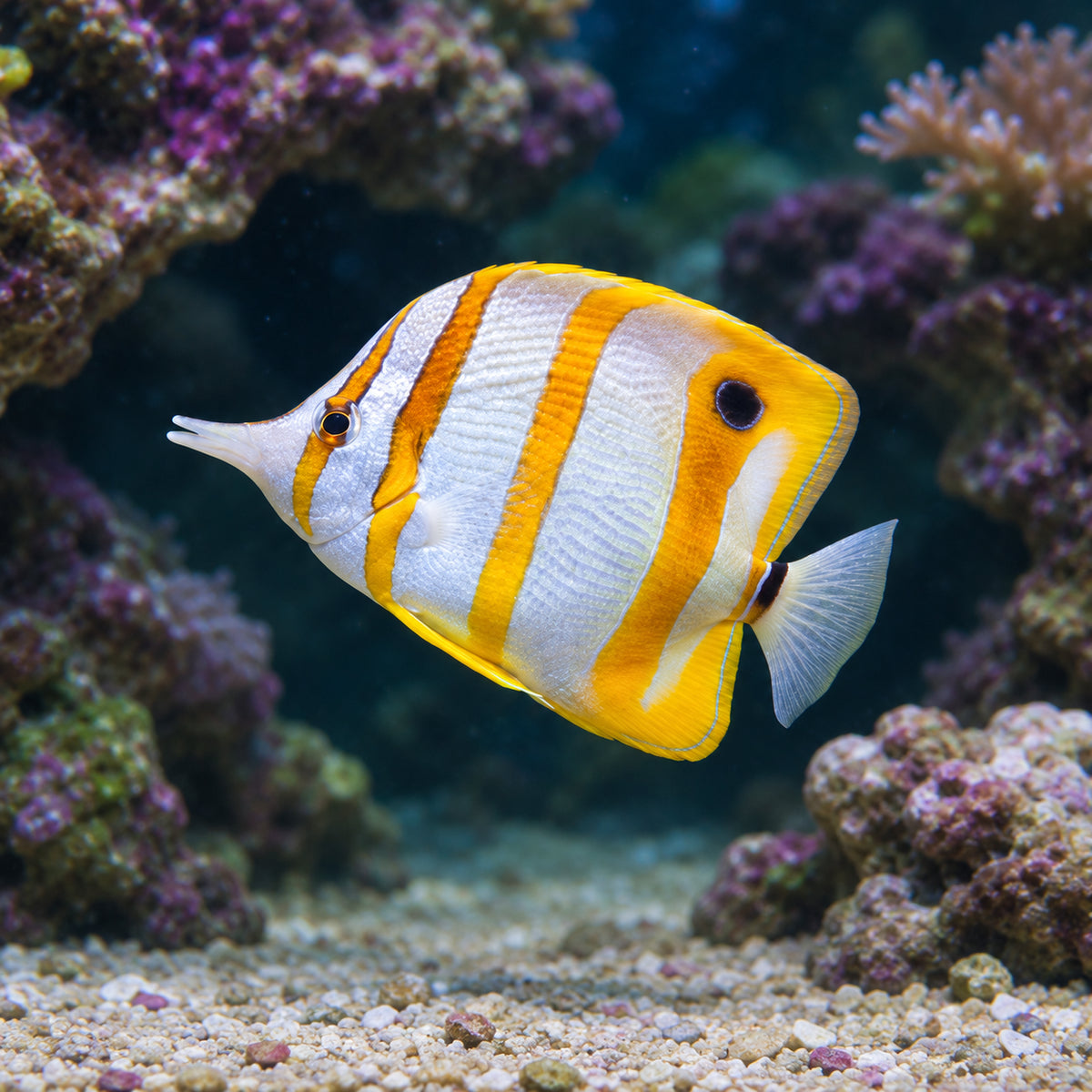
Bring remarkable elegance and distinctive tropical coloration to your saltwater aquarium with the Copperband Butterflyfish (Chelmon rostratus). Also known as the Copperbanded Butterflyfish or Beaked Coralfish, this beautiful marine species is recognized for its silver-white body, brilliant copper-orange vertical bands, elongated snout, and distinctive dark eyespot near the rear of its dorsal fin. Its graceful swimming behavior and unmistakable appearance make it one of the most recognizable butterflyfish in the marine aquarium hobby.
Native to tropical Indo-West Pacific waters, the Copperband Butterflyfish naturally inhabits coastal reefs, sheltered lagoons, and rocky marine environments. Its specialized feeding behavior, peaceful temperament, and fascinating appearance make it particularly appealing to experienced saltwater aquarium enthusiasts who can provide a mature aquarium and appropriate nutritional care.
At a Glance: Quick Species Facts
- Common Name: Copperband Butterflyfish, Copperbanded Butterflyfish, Beaked Coralfish
- Scientific Name: Chelmon rostratus
- Family: Chaetodontidae
- Natural Distribution: Indo-West Pacific Ocean
- Maximum Adult Size: Approximately 8 inches
- Recommended Minimum Aquarium Size: 125 gallons
- Care Level: Difficult / Advanced
- Temperament: Generally Peaceful; May Be Territorial Toward Similar Butterflyfish
- Diet: Carnivore / Benthic Invertebrate Feeder
- Reef Compatibility: Reef Safe with Caution
- Water Temperature: 74–78°F
- Specific Gravity: 1.023–1.026
- Recommended pH: 8.1–8.4
Characteristics
The Copperband Butterflyfish is admired for its striking coloration, distinctive body shape, and specialized feeding anatomy.
Its body displays a beautiful silver-white background decorated with several copper-orange vertical bands outlined by darker markings. These bold stripes create an elegant contrast against its pale body coloration.
One of the species' most recognizable features is its exceptionally long, narrow snout, which allows it to investigate small openings in rocky reef structures and extract food from narrow crevices.
The Copperband Butterflyfish also possesses a prominent dark eyespot near the rear portion of the dorsal fin. This marking may help confuse predators by creating the appearance of a second eye.
Its laterally compressed body and delicate fins allow it to maneuver gracefully among coral formations, live rock, and sheltered reef environments.
Natural Feeding Behavior
Unlike many marine fish that capture food primarily in open water, Copperband Butterflyfish naturally search reef surfaces for small invertebrates.
Their elongated snouts allow them to reach into small cracks, holes, and crevices that may be inaccessible to other fish.
This specialized feeding behavior makes the species fascinating to observe but also contributes to its demanding nutritional requirements in captivity.
Individual specimens may display natural variations in coloration, markings, and feeding behavior.
Optimal Aquarium Conditions & Care Guide
The Copperband Butterflyfish requires a large, mature, well-established saltwater aquarium with stable water parameters, abundant live rock, suitable hiding locations, and generous swimming space.
A minimum aquarium size of approximately 125 gallons is recommended for long-term care, with larger aquariums preferred for community setups.
Because this species can be difficult to acclimate to prepared foods, it is best suited for experienced marine aquarists who can carefully monitor feeding behavior and provide appropriate nutritional support.
Recommended Aquarium Setup
- Live Rock: Provide abundant established live rock with natural crevices and foraging surfaces.
- Swimming Space: Maintain sufficient open areas for comfortable swimming and exploration.
- Hiding Places: Incorporate caves, overhangs, and sheltered resting locations.
- Water Movement: Provide moderate, well-distributed circulation with calmer areas for resting and feeding.
- Filtration: Maintain effective biological and mechanical filtration.
- Substrate: Marine sand or crushed coral may be used to create a natural aquarium environment.
- Aquascaping: Arrange rockwork to provide accessible feeding surfaces and secure retreat areas.
- Aquarium Maturity: Introduce this species into an established aquarium with stable biological filtration.
- Water Quality: Maintain consistent temperature, salinity, pH, and adequate oxygenation.
In its natural habitat, the Copperband Butterflyfish inhabits coastal reef environments where it explores rocky structures and searches for small marine organisms.
Established live rock is particularly beneficial because it provides natural foraging opportunities and encourages normal exploratory behavior.
Providing a peaceful environment and protected hiding locations can help reduce stress during the fish's adjustment to captivity.
Stable marine water conditions and reliable access to an appropriate diet are essential for long-term health.
Behavior and Tank Mates
The Copperband Butterflyfish is generally considered a peaceful and relatively shy marine fish.
Its cautious temperament makes appropriate tank mate selection especially important, as aggressive or highly competitive fish may intimidate it or interfere with feeding.
Potential Tank Mates
- Ocellaris and Percula Clownfish
- Cardinalfish
- Peaceful wrasses
- Gobies
- Blennies
- Peaceful anthias
- Carefully selected, non-aggressive tangs in appropriately sized aquariums
- Other compatible peaceful marine fish
Compatibility depends on aquarium size, individual temperament, and available hiding locations.
Avoid housing Copperband Butterflyfish with highly aggressive species or dominant feeding competitors that may prevent them from obtaining adequate nutrition.
Keeping Multiple Copperband Butterflyfish
Copperband Butterflyfish may display territorial behavior toward members of their own species or similarly shaped butterflyfish.
Although compatible pairs may occur naturally, keeping multiple specimens together in captivity requires careful planning and substantial aquarium space.
A single Copperband Butterflyfish is generally recommended for a typical home marine aquarium.
Carefully monitor territorial interactions when introducing additional butterflyfish or other species with similar feeding behavior.
Reef Aquarium Compatibility
Copperband Butterflyfish are considered reef safe with caution. Although many individuals coexist successfully with certain corals, their natural feeding behavior may place ornamental invertebrates at risk.
Potentially vulnerable aquarium inhabitants include:
- Feather duster worms
- Tube-dwelling marine worms
- Small ornamental crustaceans
- Clam mantles
- Selected soft corals
- Other sensitive reef-associated invertebrates
Some Copperband Butterflyfish may also nip at coral polyps, although this behavior varies between individuals.
This species is sometimes associated with consuming nuisance Aiptasia anemones. However, not every Copperband Butterflyfish will eat Aiptasia, and its effectiveness as a natural pest-control fish cannot be guaranteed.
Because of its specialized feeding habits, the Copperband Butterflyfish should not be purchased solely for aquarium pest control.
Carefully monitor interactions with sensitive corals and ornamental invertebrates when introducing this species into an established reef aquarium.
Diet and Feeding Requirements
The Copperband Butterflyfish is a carnivorous marine fish with specialized feeding requirements.
In its natural environment, it consumes small benthic invertebrates, worms, crustaceans, and other organisms found within rocky reef crevices.
Its long, narrow snout is specifically adapted for extracting food from small openings and protected areas.
One of the greatest challenges associated with keeping Copperband Butterflyfish is establishing reliable acceptance of suitable aquarium foods.
Recommended Foods
- Frozen mysis shrimp
- Enriched brine shrimp
- Marine clam preparations
- Finely chopped marine shrimp
- Appropriate live marine worms
- Frozen marine plankton preparations
- Specialized frozen butterflyfish foods
- High-quality marine carnivore preparations when accepted
Newly introduced specimens may initially refuse conventional prepared foods, making careful observation of feeding behavior especially important.
Suitable frozen or live marine foods may help stimulate natural feeding responses.
Offering appropriately sized foods near live rock crevices can encourage the Copperband Butterflyfish to use its natural foraging behavior.
Established live rock may provide supplementary natural food sources, including small marine invertebrates.
Reliable feeding acceptance and healthy body condition are especially important for the long-term survival of this species.
A varied diet containing high-quality marine proteins helps support coloration, immune function, and overall well-being.
Important Shipping & Acclimation Notes
Live Animal Notice: The Copperband Butterflyfish is a living marine animal. Individual specimens may naturally vary in coloration, markings, size, and behavior.
Transportation and handling may temporarily affect coloration, swimming activity, and appetite.
Newly arrived Copperband Butterflyfish may initially seek shelter among rockwork or remain in protected areas while adjusting to unfamiliar aquarium conditions.
This species can be particularly sensitive to transportation stress and disruptions in feeding behavior.
Before introducing your fish, ensure your aquarium is established and maintains suitable temperature, salinity, oxygen levels, and overall water quality.
Inspect the fish upon arrival and follow the acclimation instructions provided with your shipment.
Avoid sudden changes in water temperature or salinity and minimize unnecessary handling.
Provide secure hiding locations, suitable foraging surfaces, and a peaceful environment during the initial adjustment period.
Appropriate quarantine procedures and careful observation are recommended before introducing new marine fish into an established display aquarium.
Closely monitor feeding acceptance, swimming behavior, and interactions with established aquarium inhabitants.
Because Copperband Butterflyfish may be intimidated by aggressive feeding competitors, ensure that the fish has suitable opportunities to access food without harassment.
With its spectacular copper-orange bands, elegant silver-white body, distinctive elongated snout, and fascinating natural feeding behavior, the Copperband Butterflyfish is a remarkable addition to a spacious, carefully maintained saltwater aquarium.
-
Free Shipping
Orders $169 and over qualify for free overnight shipping. A $12.50 packaging fee applies. Destination rates and restrictions apply. Shipping details.