

SDC
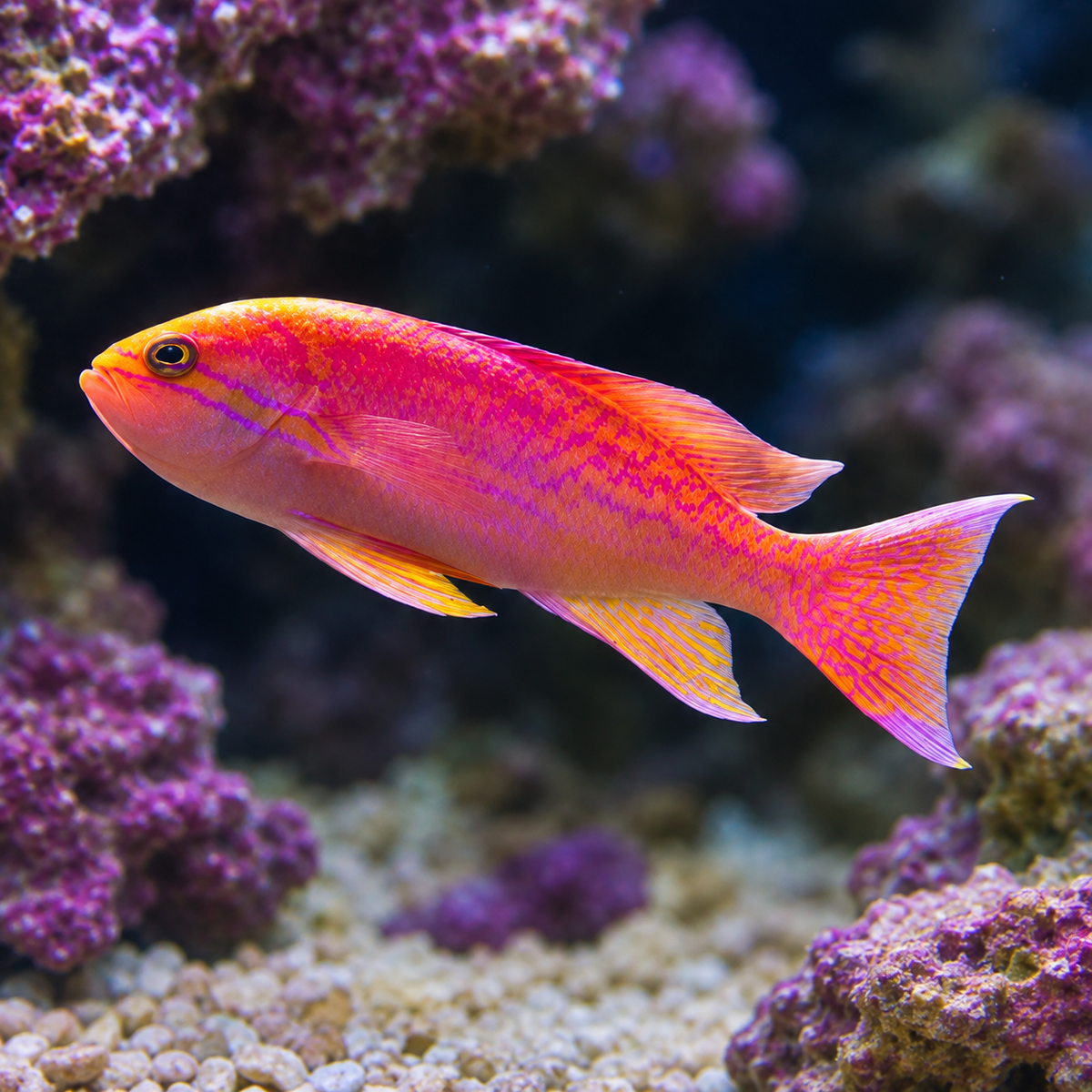
Bimaculatus Anthias – Male
Bimaculatus Anthias – Male
Couldn't load pickup availability
Free overnight shipping at $169+. $12.50 packaging applies. Destination restrictions apply.
Shipping details Day-of-arrival claim requirements
Free Shipping*
Free Shipping*
Orders $169 and over qualify for free overnight shipping. A $12.50 packaging fee applies. Destination rates and restrictions apply. Shipping details.
Live Arrival Guaranteed
Live Arrival Guaranteed
Live arrival is covered on the day of arrival only. Email photos under 5MB to support@SaltwaterFishSale.com on that same day. For valid DOA claims, we offer a refund or store credit for the value of the fish within 5 business days. No videos or reshipments. Shipping is non-refundable. Additional proof is required for fish over $100. Full claim instructions.
Introduce spectacular color and graceful movement to your saltwater aquarium with the Male Bimaculatus Anthias (Pseudanthias bimaculatus). Also known as the Two-Spot Anthias or Twinspot Anthias, this beautiful marine fish is recognized for its vibrant reddish-pink body, intricate horizontal markings, and distinctive dark spots along the dorsal fin. Its striking appearance and active swimming behavior make it a captivating addition to established saltwater reef aquariums.
Native to the tropical Indo-West Pacific, including the Maldives, East Africa, and Indonesia, Bimaculatus Anthias naturally inhabit coastal reef slopes and deeper rocky reef environments. These colorful fish gather in social groups and capture small planktonic organisms carried through ocean currents. Male specimens are especially admired for their elaborate coloration, fascinating social displays, and elegant swimming movements.
At a Glance: Quick Species Facts
- Common Name: Bimaculatus Anthias, Two-Spot Anthias, Twinspot Anthias
- Scientific Name: Pseudanthias bimaculatus
- Family: Anthiadidae
- Sex: Male
- Natural Distribution: Indo-West Pacific, including East Africa, Maldives, and Indonesia
- Maximum Adult Size: Approximately 5–5.5 inches
- Recommended Minimum Aquarium Size: 125 gallons
- Care Level: Moderate to Advanced
- Temperament: Generally Peaceful; Territorial Toward Rival Males
- Diet: Carnivore / Zooplanktivore
- Reef Compatibility: Reef Safe
- Water Temperature: 72–78°F
- Specific Gravity: 1.023–1.026
- Recommended pH: 8.1–8.4
Characteristics
The Male Bimaculatus Anthias is celebrated for its remarkable combination of vibrant coloration, intricate body markings, and elegant fin structure.
Mature males typically display a reddish-pink to lavender body decorated with irregular horizontal pink lines and markings extending from the head toward the tail.
One of the species' most recognizable characteristics is the presence of one or two dark spots along the dorsal fin. These distinctive markings contribute to the common names Two-Spot Anthias and Twinspot Anthias.
The head may display beautiful pink or lavender coloration that gradually transitions into deeper red or reddish-orange tones toward the rear of the body.
The elongated dorsal fin and gracefully shaped tail complement the fish's streamlined body, allowing it to maneuver efficiently through open water.
Male and Female Coloration
Bimaculatus Anthias display noticeable differences between male and female coloration.
Males commonly possess more elaborate reddish-pink patterns, distinctive dorsal markings, and pronounced coloration associated with their social dominance.
Females generally display softer pink coloration with contrasting yellow dorsal, anal, and caudal fins.
Color intensity can vary with maturity, social status, lighting conditions, and individual characteristics.
Natural Social Behavior
Bimaculatus Anthias are protogynous hermaphrodites, meaning individuals begin life as females and may transition into males under appropriate social conditions.
In natural reef environments, these fish form social groups where dominant males maintain territories and interact with surrounding females.
Male specimens may intensify their coloration during social displays and interactions with other anthias.
Individual specimens may naturally vary in coloration, markings, fin development, and behavior.
Optimal Aquarium Conditions & Care Guide
The Male Bimaculatus Anthias thrives in a large, mature, well-established saltwater aquarium with stable water parameters, generous open swimming space, established live rock, and secure hiding locations.
A minimum aquarium size of approximately 125 gallons is recommended, with larger aquariums preferred for social groups and community reef environments.
Because this species naturally inhabits deeper reef slopes, it benefits from protected rocky retreats and areas with subdued lighting, particularly during its initial adjustment to aquarium conditions.
Recommended Aquarium Setup
- Live Rock: Provide established live rock with natural caves, crevices, and sheltered resting areas.
- Swimming Space: Maintain generous unobstructed areas for active midwater swimming.
- Hiding Places: Incorporate rocky overhangs and protected retreat locations.
- Water Movement: Provide moderate to strong, well-distributed circulation to simulate natural reef currents.
- Filtration: Maintain effective biological and mechanical filtration with excellent oxygenation.
- Lighting: Provide shaded retreats and allow newly introduced specimens to adjust gradually to bright aquarium lighting.
- Substrate: Marine sand or crushed coral may be used to create a natural reef environment.
- Aquarium Cover: A secure, tightly fitted lid or appropriate mesh cover is strongly recommended because anthias may jump when startled.
- Aquarium Maturity: Introduce this species into a stable, established aquarium with consistent biological filtration.
In their natural environment, Bimaculatus Anthias frequently inhabit coastal reef drop-offs at moderate depths, where currents transport planktonic food through the water column.
Providing a combination of open swimming space and sheltered rockwork encourages natural behavior while allowing individuals to retreat when stressed.
Stable temperature, salinity, pH, and overall water quality are important for maintaining healthy coloration, activity levels, and long-term condition.
Behavior and Tank Mates
The Male Bimaculatus Anthias is generally considered a peaceful marine community fish, although territorial aggression may occur between competing males or individuals establishing social dominance.
Its active swimming behavior and vivid coloration make it particularly attractive in spacious reef aquariums containing other peaceful marine fish.
Potential Tank Mates
- Ocellaris and Percula Clownfish
- Cardinalfish
- Peaceful fairy wrasses
- Flasher wrasses
- Gobies
- Blennies
- Firefish
- Other appropriately sized peaceful reef fish
Compatibility depends on aquarium size, individual temperament, feeding competition, and available hiding locations.
Avoid highly aggressive or territorial tank mates that may intimidate Bimaculatus Anthias or prevent them from accessing food.
Keeping Bimaculatus Anthias in Groups
Bimaculatus Anthias naturally form social groups and may be maintained in sufficiently spacious aquariums containing one male and several females.
A carefully managed group consisting of one male and multiple females can provide opportunities to observe their natural social hierarchy and interactions.
Multiple males may compete aggressively for dominance, particularly when aquarium space is limited.
A single male is generally the preferred arrangement unless the aquarium is exceptionally spacious and the group is carefully managed.
Monitor group interactions for persistent chasing, aggression, feeding competition, or individuals remaining hidden for extended periods.
Reef Aquarium Compatibility
Bimaculatus Anthias are considered reef safe and are generally compatible with established coral reef aquariums.
They do not typically consume healthy coral tissue and generally coexist with appropriately sized ornamental shrimp, snails, crabs, and other common reef invertebrates.
Their natural diet primarily consists of small planktonic organisms captured from the water column rather than coral polyps.
Very small crustaceans and planktonic organisms may occasionally be consumed as part of normal feeding behavior.
With appropriate care, this species can complement reef aquariums containing a variety of soft corals, large-polyp stony corals, and small-polyp stony corals.
Diet and Feeding Requirements
The Male Bimaculatus Anthias is a carnivorous, zooplankton-feeding marine fish that naturally consumes small crustaceans and other planktonic organisms carried through reef environments.
A varied diet containing appropriately sized, high-quality marine proteins is essential for supporting healthy body condition, coloration, and normal activity.
Recommended Foods
- Frozen mysis shrimp
- Enriched brine shrimp
- Frozen copepods
- Marine zooplankton preparations
- Finely chopped marine shrimp
- Finely chopped marine clam or squid
- High-quality marine carnivore pellets when accepted
- Marine flakes when accepted
- Prepared frozen marine carnivore blends
Because Bimaculatus Anthias naturally capture food suspended in the water column, appropriately sized foods carried by aquarium circulation can help encourage normal feeding behavior.
This species has relatively high nutritional demands associated with its active plankton-feeding lifestyle. Maintaining reliable acceptance of a suitable diet is especially important for long-term health.
Newly introduced specimens may initially hesitate to accept unfamiliar prepared foods. Enriched frozen or appropriate live marine foods can help stimulate normal feeding responses.
Established aquariums containing healthy populations of small planktonic organisms may provide supplementary natural food sources.
A varied, nutritionally balanced marine diet helps support coloration, healthy body condition, and overall well-being.
Important Shipping & Acclimation Notes
Live Animal Notice: The Male Bimaculatus Anthias is a living marine animal. Individual specimens may naturally vary in coloration, markings, size, and behavior.
This listing is designated for male specimens, which typically display distinctive reddish-pink coloration, irregular horizontal body markings, and one or two dark spots along the dorsal fin.
Transportation and handling may temporarily affect coloration, swimming activity, and appetite.
Newly arrived Bimaculatus Anthias may initially seek shelter among rockwork or remain in shaded locations while adjusting to unfamiliar aquarium conditions.
Because this species naturally inhabits deeper reef environments, newly introduced individuals may require additional time to become comfortable in brightly illuminated aquariums.
Before introducing your fish, ensure your aquarium is established and maintains suitable temperature, salinity, oxygen levels, and overall water quality.
Inspect the fish upon arrival and follow the acclimation instructions provided with your shipment.
Avoid sudden changes in temperature or salinity and minimize unnecessary handling.
Because anthias may jump when startled, ensure the aquarium is securely covered before introducing newly arrived specimens.
Provide shaded retreats, secure hiding locations, and sufficient swimming space during the initial adjustment period.
Appropriate quarantine procedures and careful observation are recommended before introducing new marine fish into an established display aquarium.
Carefully monitor feeding acceptance, swimming behavior, and interactions with established aquarium inhabitants.
With its spectacular reddish-pink coloration, distinctive dorsal fin spots, elegant swimming movements, and fascinating social behavior, the Male Bimaculatus Anthias is an exceptional addition to a spacious, well-maintained saltwater reef aquarium.
-
Free Shipping
Orders $169 and over qualify for free overnight shipping. A $12.50 packaging fee applies. Destination rates and restrictions apply. Shipping details.