

SDC
Annularis Angelfish – Adult
Annularis Angelfish – Adult
Couldn't load pickup availability
Free overnight shipping at $169+. $12.50 packaging applies. Destination restrictions apply.
Shipping details Day-of-arrival claim requirements
Free Shipping*
Free Shipping*
Orders $169 and over qualify for free overnight shipping. A $12.50 packaging fee applies. Destination rates and restrictions apply. Shipping details.
Live Arrival Guaranteed
Live Arrival Guaranteed
Live arrival is covered on the day of arrival only. Email photos under 5MB to support@SaltwaterFishSale.com on that same day. For valid DOA claims, we offer a refund or store credit for the value of the fish within 5 business days. No videos or reshipments. Shipping is non-refundable. Additional proof is required for fish over $100. Full claim instructions.
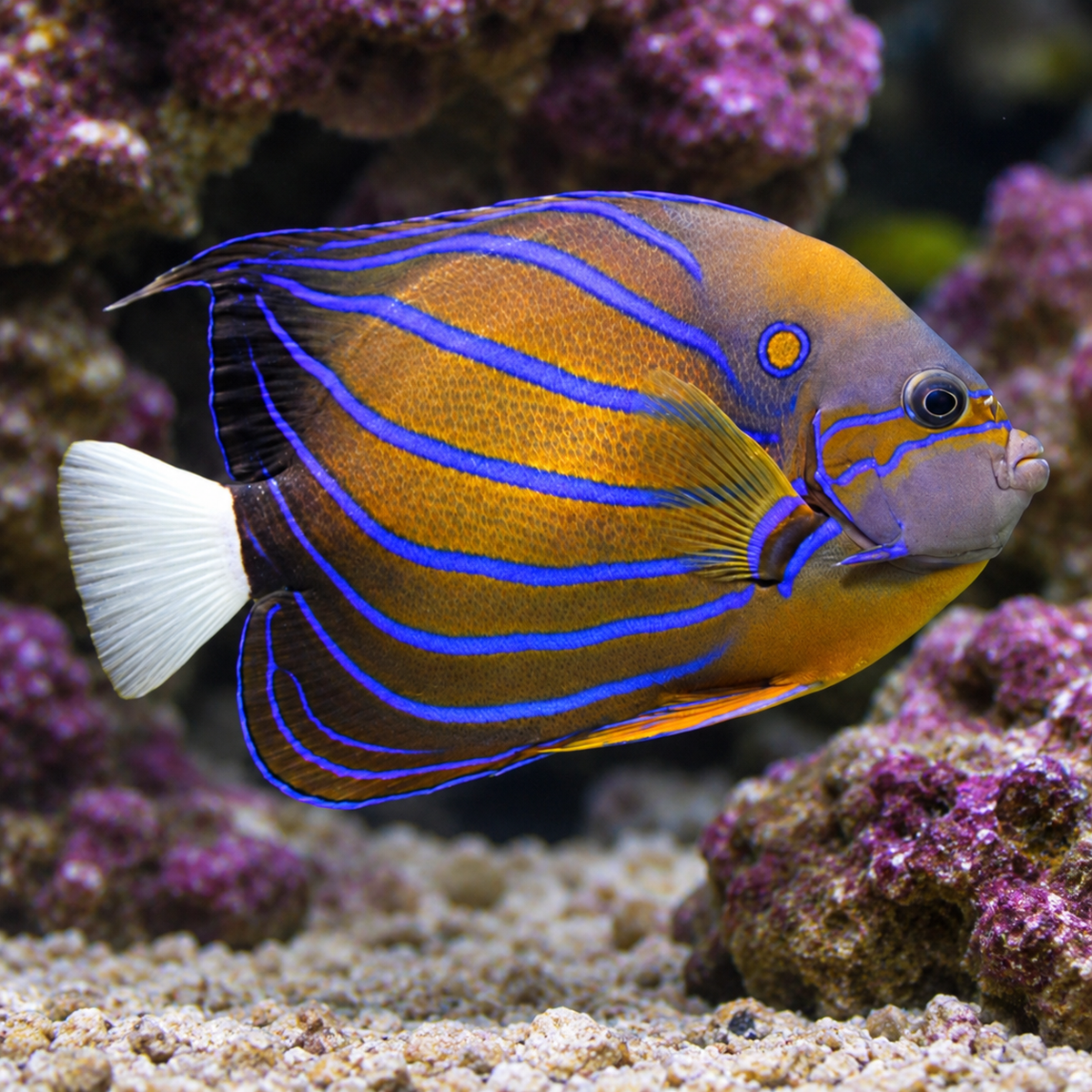
Bring breathtaking color and an impressive presence to your saltwater aquarium with the Adult Annularis Angelfish (Pomacanthus annularis). Also known as the Blue Ring Angelfish or Blue King Angelfish, this spectacular marine species is recognized for its golden-brown body, brilliant electric-blue curved stripes, and distinctive blue ring behind the gill cover. Its remarkable coloration and bold personality make it a stunning centerpiece for experienced saltwater aquarium enthusiasts.
Native to tropical Indo-West Pacific coral reefs, the Annularis Angelfish is a large, active marine fish that naturally explores rocky reef formations, caves, and coastal reef environments. Adult specimens display striking coloration that differs dramatically from their juvenile appearance, making this species particularly fascinating to marine aquarium hobbyists.
At a Glance: Quick Species Facts
- Common Name: Annularis Angelfish, Blue Ring Angelfish, Blue King Angelfish
- Scientific Name: Pomacanthus annularis
- Family: Pomacanthidae
- Life Stage: Adult
- Natural Distribution: Indo-West Pacific Ocean
- Maximum Adult Size: Approximately 18 inches
- Recommended Minimum Aquarium Size: 220 gallons
- Care Level: Moderate
- Temperament: Semi-Aggressive and Territorial
- Diet: Omnivore
- Reef Compatibility: Not Recommended for Typical Mixed Reef Aquariums
- Water Temperature: 72–78°F
- Specific Gravity: 1.020–1.025
- Recommended pH: 8.1–8.4
Characteristics
The Adult Annularis Angelfish is admired for its extraordinary coloration, impressive size, and distinctive body markings. Mature specimens display a golden-brown to yellowish body decorated with elegant, curved electric-blue stripes running horizontally along the sides.
One of the most recognizable features of this species is the brilliant blue ring located behind and slightly above the gill cover. This distinctive marking gives the Blue Ring Angelfish its common name.
Two additional blue stripes extend across the face, while the dorsal and anal fins display beautiful blue accents. The pale tail, often bordered with yellow, provides additional contrast.
The Annularis Angelfish undergoes a dramatic transformation as it matures. Juvenile specimens typically feature a dark blue-black body with curved white and pale-blue stripes, while adults develop their characteristic golden coloration and bright blue horizontal markings.
Its large, laterally compressed body allows it to navigate coral reef structures while maintaining strong swimming capabilities.
Like other large marine angelfish, the Annularis Angelfish possesses a defensive spine near the edge of its gill cover. Appropriate caution should be used when handling or transferring specimens.
Individual fish may display natural variations in coloration, markings, and temperament.
Optimal Aquarium Conditions & Care Guide
The Adult Annularis Angelfish requires a large, mature saltwater aquarium with stable water parameters, extensive swimming space, abundant live rock, and secure hiding locations.
A minimum aquarium size of approximately 220 gallons is recommended for long-term care, with larger aquariums preferred for fully grown specimens and community setups.
Recommended Aquarium Setup
- Live Rock: Provide abundant established live rock with natural grazing surfaces and sturdy formations.
- Hiding Places: Incorporate spacious caves, overhangs, and secure rocky crevices.
- Swimming Space: Maintain extensive open areas for active swimming and exploration.
- Water Movement: Provide moderate to strong, well-distributed circulation with sheltered resting locations.
- Filtration: Maintain effective biological and mechanical filtration suitable for a large marine angelfish.
- Aquascaping: Ensure rock formations are stable and provide enough space for the fish to turn comfortably.
- Aquarium Maturity: Introduce this species into a well-established aquarium with consistent biological filtration.
- Water Quality: Maintain stable temperature, salinity, pH, and adequate oxygenation.
In its natural environment, the Annularis Angelfish inhabits coastal reefs, rocky areas, and coral formations where it searches for food and shelter.
Providing appropriate caves and hiding locations is especially important for helping large angelfish feel secure within the aquarium.
Because this species can reach a substantial adult size, long-term aquarium planning should prioritize both swimming space and territorial requirements.
Behavior and Tank Mates
The Annularis Angelfish is considered a semi-aggressive and territorial marine fish that may establish and defend preferred areas within the aquarium.
Adult specimens can be particularly assertive toward other large angelfish or similarly shaped marine fish.
Potential Tank Mates
- Compatible tangs in appropriately sized aquariums
- Rabbitfish
- Appropriately sized wrasses
- Selected butterflyfish
- Other robust, compatible marine community fish
Compatibility depends on aquarium size, individual temperament, and the established social hierarchy.
Housing multiple large angelfish together requires careful planning, substantial aquarium space, and close observation.
Avoid combining this species with fish that are likely to be intimidated or injured by territorial aggression.
Adult Annularis Angelfish may become particularly territorial around preferred caves, grazing areas, and established resting locations.
Reef Aquarium Compatibility
Adult Annularis Angelfish are not recommended for typical mixed reef aquariums. Although some individuals may coexist with selected corals, this species naturally feeds on reef-associated organisms and may nip at or consume ornamental invertebrates.
Potentially vulnerable aquarium inhabitants include:
- Large-polyp stony corals (LPS)
- Small-polyp stony corals (SPS)
- Soft corals
- Zoanthids and other colonial polyps
- Clam mantles
- Sponges and tunicates
- Feather duster worms and other sessile invertebrates
Individual behavior varies, but coral and invertebrate damage cannot be ruled out.
A spacious fish-only-with-live-rock aquarium is generally the more appropriate environment for an adult Annularis Angelfish.
Diet and Feeding Requirements
The Annularis Angelfish is an omnivorous marine fish that naturally consumes sponges, tunicates, algae, and other reef-associated organisms.
A varied diet containing sponge-based preparations, marine algae, and appropriate protein sources is important for supporting healthy coloration, growth, and overall condition.
Recommended Foods
- High-quality marine angelfish preparations
- Sponge-containing frozen angelfish foods
- Marine algae and dried seaweed
- Spirulina-based marine flakes and pellets
- Frozen mysis shrimp
- Enriched brine shrimp
- Prepared frozen marine omnivore blends
- Appropriately sized marine protein preparations
Established live rock can provide additional natural grazing opportunities and encourage normal exploratory feeding behavior.
Sponge-containing marine angelfish preparations are particularly beneficial because sponges form an important component of this species' natural diet.
A balanced selection of plant-based and protein-rich marine foods helps support long-term health and maintain the fish's vibrant coloration.
Important Shipping & Acclimation Notes
Live Animal Notice: The Annularis Angelfish is a living marine animal. Individual specimens may naturally vary in coloration, markings, size, and temperament.
This listing is designated for adult specimens, which display different coloration and patterns from juvenile Annularis Angelfish.
Transportation and handling may temporarily affect coloration, swimming activity, and appetite.
Newly arrived adult angelfish may initially seek shelter among rockwork while adjusting to unfamiliar aquarium conditions.
Before introducing your fish, ensure your aquarium is established and maintains suitable temperature, salinity, oxygen levels, and overall water quality.
Inspect the fish upon arrival and follow the acclimation instructions provided with your shipment.
Avoid sudden changes in water temperature or salinity and minimize unnecessary handling.
Because large marine angelfish possess defensive spines near their gill covers, exercise caution when handling or transferring specimens. Avoid methods that could entangle or damage these spines.
Provide spacious hiding locations, adequate swimming space, and a calm environment during the initial adjustment period.
Appropriate quarantine procedures and careful observation are recommended before introducing new marine fish into an established display aquarium.
Monitor interactions with established aquarium inhabitants, particularly other large angelfish and territorial marine fish.
With its spectacular electric-blue stripes, distinctive blue ring, and impressive adult coloration, the Annularis Angelfish is a magnificent centerpiece for experienced aquarists maintaining large, well-established saltwater aquariums.
-
Free Shipping
Orders $169 and over qualify for free overnight shipping. A $12.50 packaging fee applies. Destination rates and restrictions apply. Shipping details.